
Montgomery County Court Records After Arrest
Court records after a jail arrest in Montgomery County should be read as a path, not as one database. The path often starts with an arrest or warrant service by a law-enforcement agency. The Montgomery County Sheriff's Office is the local custody contact, and the official county page lists the Sheriff's Office at 208 East Broad Street in Mount Vernon with phone 912-583-2521. GDC also lists a Montgomery County Jail location at 208 Broad Street with the same phone number. At the same time, the Georgia Sheriffs' Association Jail Report for May 2026 lists Montgomery as "NO JAIL," with zero inmates and zero capacity. That conflict matters because a court case may exist even when there is no live county jail roster to check.
After arrest, the court side runs through Montgomery Magistrate Court for first appearance, bond hearings, arrest warrants, search warrants, and civilian warrant applications. Felony prosecution and later case events route to Superior Court and the Oconee Judicial Circuit District Attorney. The Montgomery County Clerk of Superior Court maintains civil, criminal, and juvenile court management records. Booking and custody facts belong with Montgomery County jail inmate records, while booking-photo questions belong with Montgomery County jail mugshots. The court record is the case file and charge history.
Source conflict: GDC lists Montgomery County Jail, but the May 2026 Georgia Sheriffs' Association report lists Montgomery as no jail with zero capacity. Verify current custody before relying on any single source.
Find Montgomery County Court Records
The official statewide entry point for Superior Court case access is Georgia Courts eAccess. That page lists Montgomery Superior Court and redirects users to PeachCourt account access. The research found an important limit: Georgia Courts says users must have an account to search court records, so Montgomery County court records after an arrest should not be described as a free anonymous search. PeachCourt may be the electronic access point, while the Clerk remains the local office for court-management records.
The Montgomery County Magistrate Court is a separate contact for early criminal-process questions. Its county page states that the court hears first appearances and bond hearings six days a week and handles arrest warrants, search warrants, and civilian warrant applications. Probate Court has a different role. The Montgomery County Probate Court page directs traffic-citation payments through EZCourtPay and identifies citation number, date of birth, and jurisdiction as needed fields. That traffic path is not a jail roster or felony court search.
- Confirm the arrest or custody event with the Montgomery County Sheriff's Office if the matter is recent.
- For first appearance, bond, or warrant-process questions, contact Montgomery Magistrate Court.
- For Superior Court criminal case records, check Georgia Courts eAccess and PeachCourt, then contact the Clerk if account access or indexing does not answer the question.
- For felony prosecution context, identify whether the Oconee Judicial Circuit District Attorney has filed, amended, or dismissed charges.
- If the person was sentenced to Georgia Department of Corrections custody, use the GDC offender locator instead of a county court or jail roster.
The screenshot below comes from the official Georgia Courts eAccess page, which is the state source that points Montgomery Superior Court users toward PeachCourt. It is useful because it shows the court-access channel, not because it proves a person is in custody.
Georgia Courts eAccess identifies the electronic access route for court records, including Montgomery Superior Court.
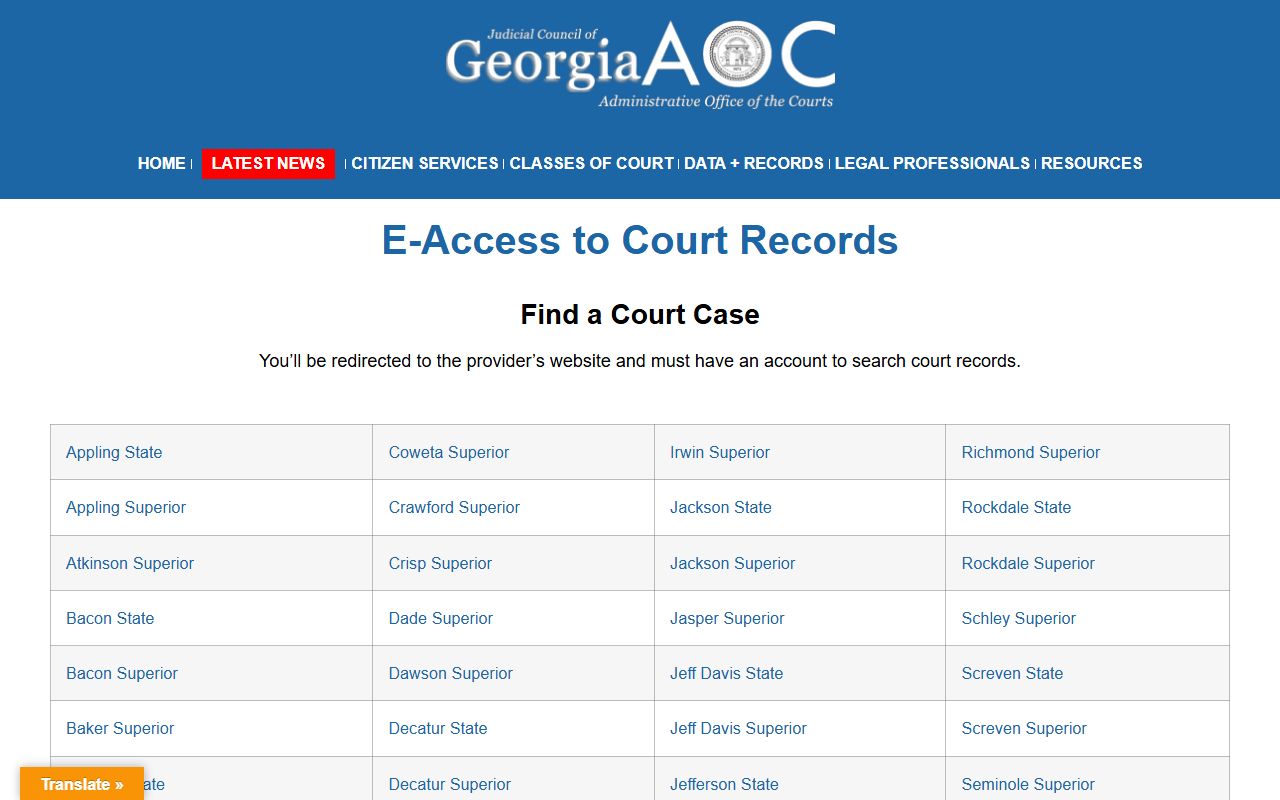
Use that state court-access source alongside the local Clerk and Magistrate Court because arrest, bond, and filed-charge records can sit in different offices at different stages.
Montgomery County Arrest to Charges
The arrest-to-court flow in Montgomery County is best described by roles. Law enforcement makes an arrest or serves a warrant. The Sheriff's Office handles the local custody or transport question. Magistrate Court handles first appearance and bond-hearing functions. Superior Court and the Oconee Judicial Circuit District Attorney handle felony prosecution and later court events. The Clerk of Superior Court maintains the court-management record after a case is opened.
Charging documents are not the same as a booking entry. A booking entry can reflect the reason a person was taken into custody, but prosecutors decide what charges to file in court. A filed charge may be based on a complaint, an accusation or information, or an indictment, depending on the case type and stage. The terms below are used in a plain records sense, not as legal advice.
| Document | Who Uses It | What It Does | Montgomery County Record Path |
|---|---|---|---|
| Complaint | Law enforcement or prosecutor | Starts or supports an initial criminal accusation after arrest or warrant service. | Often tied to first appearance, warrant, or early Magistrate Court activity. |
| Information or accusation | Prosecutor | States charges the prosecutor elects to pursue without relying on the original booking label alone. | May appear in Superior Court records and prosecutor-filed case events. |
| Indictment | Grand jury | Formally charges serious offenses after grand-jury action. | Tracked through Superior Court and the Clerk's criminal case records. |
The Montgomery County District Attorney page identifies the Oconee Judicial Circuit District Attorney as the prosecutor for the circuit. The Prosecuting Attorneys' Council profile also lists Timothy Vaughn. That office is relevant to filed charges, plea activity, dismissal decisions, and prosecution status, but it is not the right office for immediate jail roster confirmation.
Montgomery County Charge Status
Charge status in Montgomery County court records can change after arrest. A person may be booked on one label, appear in Magistrate Court for bond, and later face a modified charge set in Superior Court. A charge can be pending even if the person has been released. A charge can also be dismissed while another charge in the same case remains active. For that reason, a court record after a jail arrest should be checked by case number, defendant name, and court office, not only by the first booking description.
| Status | Records Meaning | Where to Verify |
|---|---|---|
| Pending | The charge has not reached final disposition by plea, verdict, dismissal, or other closing event. | PeachCourt, the Clerk, or the assigned court. |
| Amended | The charge wording, code, level, or count may have changed after filing. | Clerk records and prosecutor filings. |
| Reduced | The filed charge has been lowered to a lesser offense or count. | Final disposition entries and plea documents. |
| Dismissed | The court record shows the charge is not being pursued or has been ended by order or filing. | Clerk records, court orders, and prosecutor filings. |
| Nolle prosequi | The prosecutor declines to proceed on that charge at that stage. | District Attorney filing and case docket. |
Statewide criminal-history records are a different channel. O.C.G.A. Section 35-3-34 concerns GCIC criminal-history disclosure limits and procedures. Georgia Rule 140-2 supplies the GCIC reporting framework. Those sources do not replace the local court docket for a pending Montgomery County charge.
Montgomery County Bond After Arrest
Bond is part of the court path after arrest, but it should not be treated as a county website payment feature. The research found no official Montgomery County jail bond-payment portal, bondsman list, cash-bond instructions, or jail lobby payment instructions. The accurate routing is direct: contact the Sheriff's Office for custody and release logistics, and contact Magistrate Court for first appearance and bond-hearing information. The county Magistrate Court page states that first appearances and bond hearings are heard six days a week.
Georgia's Judicial Council misdemeanor bail bench card cites several bail statutes, including O.C.G.A. Sections 17-6-1, 17-6-12, 17-6-4, 17-6-5, and 17-6-50. The statewide guidance says bail should be considered as soon as possible, ability to pay should be considered, and bail schedules cannot be the only mechanism without an individualized review. A bail-restricted offense is a Georgia category that requires secured release rather than unsecured judicial release.
| Release Term | Plain Meaning | Montgomery County Verification |
|---|---|---|
| Cash bond | Money is posted to secure release under court conditions. | Ask the Sheriff's Office and Magistrate Court because no county payment page was found. |
| Surety bond | A bonding company posts the bond under state and court rules. | Confirm whether the court has allowed that form of release. |
| PR bond | Release on personal recognizance, meaning no secured money bond is required. | Depends on the judge, offense, and case status. |
| Hold or detainer | Another case, warrant, agency, or custody order may block release. | Ask the holding agency and check court or warrant status. |
Montgomery County Warrants and Arrest
Warrant records can sit before a jail arrest and then shape the first court events after arrest. The official Georgia.gov warrant guidance says existing-warrant searches are handled by the local sheriff's office. It also says a requester should have the person's first and last name, birth date, and county. Some sheriff's offices may provide information by phone, while others may require an in-person appearance.
For Montgomery County, the research gives two local contacts for warrant questions: the Sheriff's Office at 912-583-2521 and Magistrate Court at 912-583-2170. The Magistrate Court page states that it executes arrest warrants and search warrants and handles civilian warrant applications. No official county warrant database was located, so a real warrant question should not be reduced to a fake online search promise.
Georgia.gov's warrant guidance is the official state source for routing existing-warrant questions to local sheriff's offices.
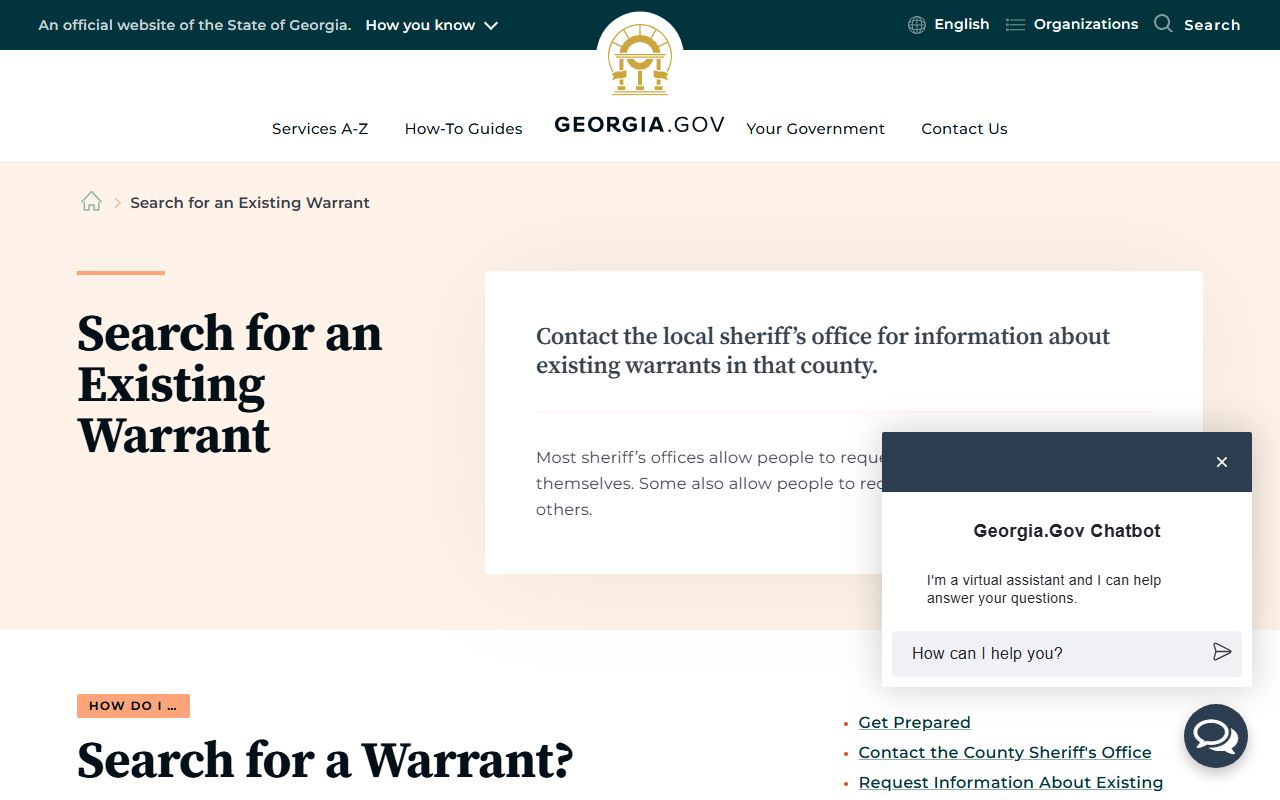
The state guidance supports a practical Montgomery County workflow: gather identifying details, call the local office, and verify any court date or bond setting with the court that handles the case.
Charges vs Convictions
A court record after a jail arrest may show charges long before it shows a conviction. A charge is an accusation filed or pursued in court. A conviction is the result of a guilty plea, verdict, or other adjudication that establishes guilt for that offense. Montgomery County users should keep that distinction in mind when reading PeachCourt entries, Clerk records, GDC records, and criminal-history material.
| Point | Charge | Conviction |
|---|---|---|
| Stage | Filed after arrest, warrant service, investigation, or prosecutor review. | Entered after plea, verdict, or other final adjudication. |
| Meaning | An allegation that still may change, be reduced, or be dismissed. | A finding or admission of guilt for the listed offense. |
| Where seen | Magistrate, Superior Court, Clerk, and prosecutor records. | Final court disposition, GDC record if sentenced to state custody, and eligible criminal-history records. |
Restricted Montgomery Court Records
Not every record tied to a Montgomery County arrest is public online. Juvenile, sealed, restricted, victim-sensitive, medical, investigative, and security-sensitive records may be withheld in whole or in part. The Georgia Attorney General's open-government material describes public records broadly, but it also recognizes that agencies may cite exemptions, timing, or cost. Agencies generally must respond within three business days by producing records, identifying when they will be available, or citing legal authority for withholding.
Georgia record restriction is often the more precise term than expungement. In many modern Georgia contexts, restricted information is limited from public dissemination rather than physically destroyed. Older wording may use expungement more broadly. The exact remedy depends on the charge, disposition, age of the person, and statute or court order involved.
| Point | Sealed or Restricted | Expunged |
|---|---|---|
| Public view | Limited or hidden from ordinary public access when law allows. | Common public term for clearing a record, though Georgia often uses restriction language. |
| Agency access | Some government or law-enforcement access may remain. | Depends on the order and the record system involved. |
| Best office | Clerk, court, or GCIC-related process depending on the record. | Clerk or court for the case record, with state rules for criminal-history dissemination. |
Note: A dismissal in a court record does not automatically prove that all jail, police, court, or criminal-history entries have been restricted.
Montgomery County Court Contacts
Several offices can be involved after a jail arrest in Montgomery County, Georgia. The Sheriff's Office answers local custody and release-logistics questions. Magistrate Court handles first appearances, bond hearings, and warrant functions. The Clerk of Superior Court maintains court-management records. The Oconee Judicial Circuit District Attorney prosecutes cases in the circuit. GDC handles state-prison records after sentence and transfer.
Clerk of Superior Court
400 S. Railroad Avenue
Mount Vernon, GA 30445
912-583-4401
Montgomery Magistrate Court
First appearances, bond hearings, warrants
Mount Vernon, GA
912-583-2170
Oconee Judicial Circuit DA
P.O. Box 1027
Eastman, GA 31023-1027
478-374-3482